
2026-04-22 · 10 min read
Build vs Buy CRM: A Decision Framework
Build vs buy CRM: stay on a subscription if the process is standard; commission custom CRM software when workarounds and seat cost become the process.
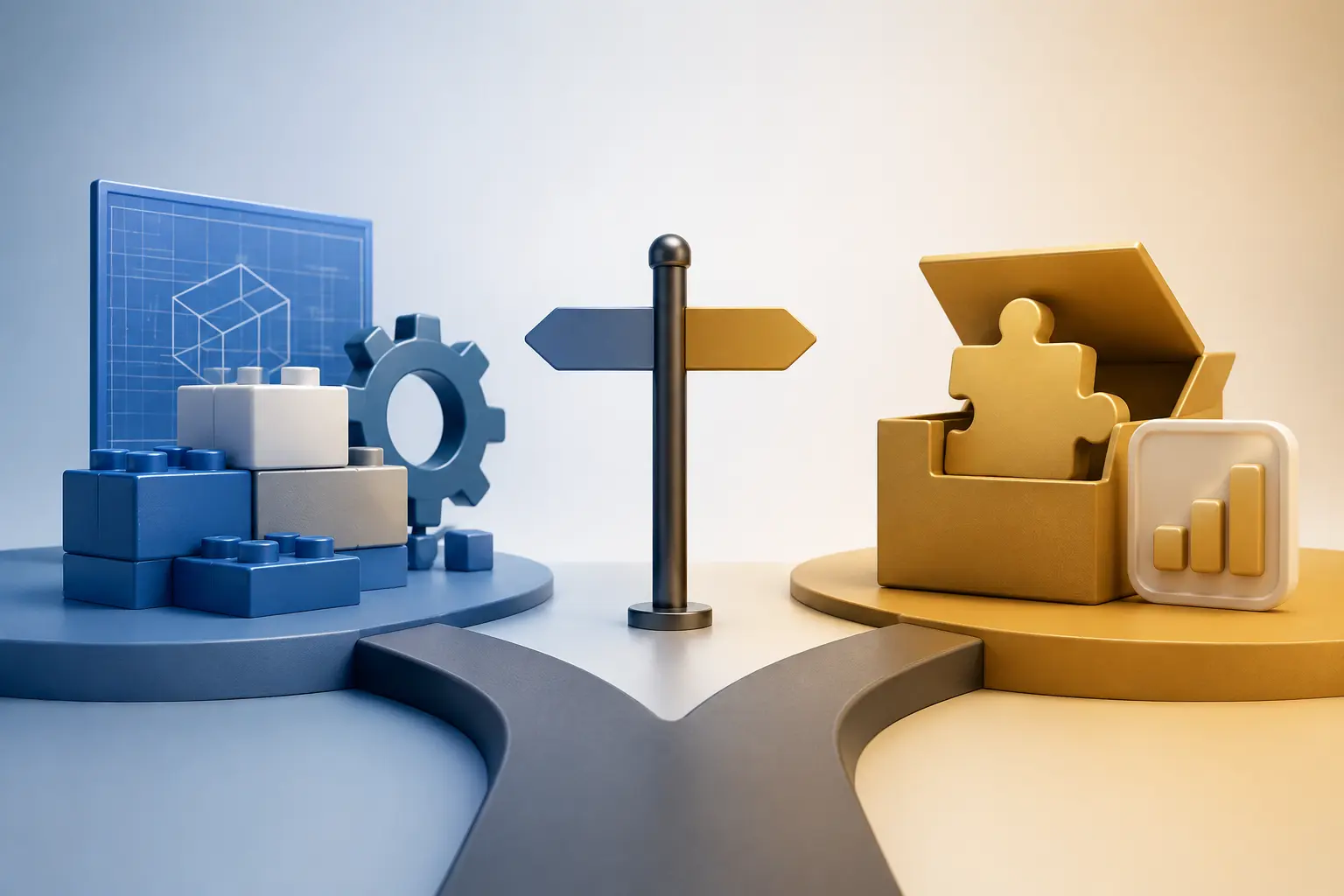
Buy a CRM when your process is common. Build a CRM when the process is the business — and the off-the-shelf object model keeps losing.
Most companies should buy first. The companies that should build are the ones already paying for workarounds.
This framework is meant for operators and founders who need a commercial decision, not a technology preference. Start with fit and total cost. End with an honest scope for a first release.
Buy if these are true
Your sales process would make sense to a stranger in your industry. Reporting needs are standard. Integrations you need are already well supported. Per-user pricing is not distorting hiring or access. The team will actually use the tool without a dedicated specialist to keep it alive.
You can map requirements to accounts, contacts, opportunities, and activities without inventing fragile custom objects for every exception. Speed to value matters more than perfect fit this quarter.
A three-month proof with a mainstream CRM that covers most of the jobs is a rational filter. If it covers the work, do not build a clone.
Build if these are true
You have a spreadsheet that is the real CRM. You run the same manual steps on every deal because the software cannot. Several products each hold part of the customer record. You need a client portal or operations tool to share the same data. Seat fees are now a material line item for people who only need a narrow workflow.
Your deal structure, pricing, or delivery lifecycle is a competitive advantage that marketplace CRMs only approximate with expensive customisation.
You can describe the workflow in operational detail: stages, owners, required data, failure cases. Without that description, you are not ready to build — you are ready for discovery.
A staged approach
Custom does not have to mean 'replace everything in six months'. A first CRM can cover the records and stages that hurt today, then connect to accounting or a portal later. Maintenance plans exist so the second phase is planned, not improvised.
Phase one should remove the most expensive workaround. Phase two should connect systems of record. Phase three should automate what humans still do reliably by hand. Skipping straight to phase three is how programmes stall.
Keep a coexistence plan. Marketing automation, email, or accounting may stay where they are while the custom CRM becomes the system of record for revenue operations.
Do not build a clone
If the brief is 'Salesforce, but cheaper', buy Salesforce or a simpler CRM. Custom CRM development is for a workflow you can describe in operational detail. If you cannot describe it, you are not ready to build it.
Cloning a popular CRM also clones years of edge-case engineering you will not finish. Build the thin system your business needs, then grow it with evidence from real use.
Reject feature parity lists copied from a vendor’s pricing page. Accept a job list written by the people who sell and deliver every week.
How to run the commercial comparison
On the buy side, total seats over three years, add-ons, implementation, admin time, and parallel tools bought because of gaps. On the build side, project cost, optional maintenance, and the internal owner who will prioritise changes.
There is no universal break-even seat count. There is your headcount, your workaround cost, and whether the process is standard. Write those three numbers down before anyone debates frameworks.
If the comparison is close and fit is poor on the buy side, favour a focused custom CRM. If fit is good and the team will adopt quickly, favour buy — even when custom looks cheaper on a spreadsheet.