
2026-04-02 · 11 min read
Custom CRM vs HubSpot: When to Build Instead of Subscribe
Custom CRM vs HubSpot: when a subscription still fits a standard sales process, and when non-standard workflow, permissions, or seat cost mean build.
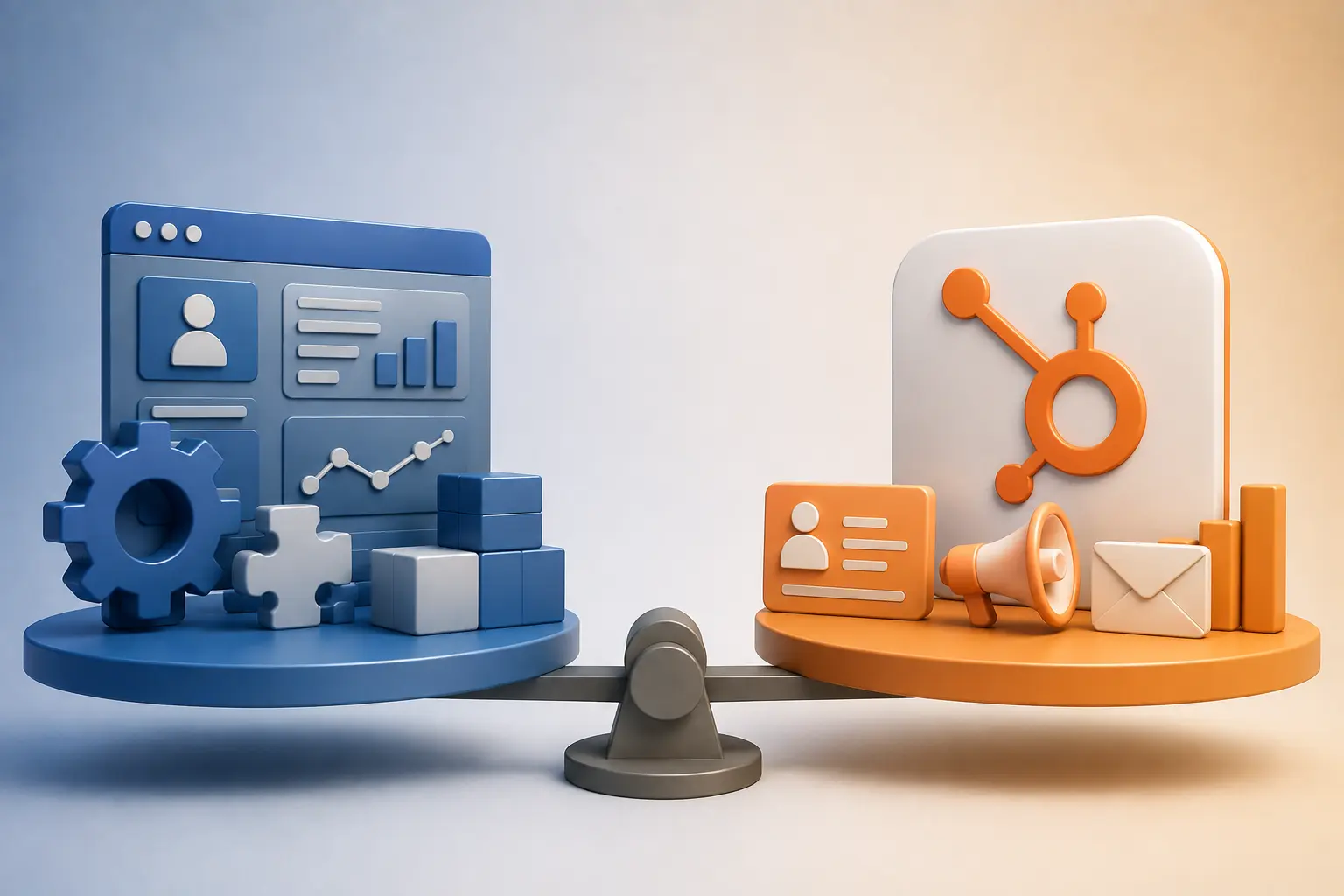
HubSpot is a capable product for teams whose process fits a mainstream inbound and sales model. Custom CRM development is the better path when the product's objects, permissions, or pricing start shaping the business instead of supporting it.
This is not an argument that HubSpot is poor software. It is an argument about fit.
Most companies should stay on a mainstream CRM. The minority that should build are already paying for seats, add-ons, and staff time to paper over a process the CRM does not model.
Where HubSpot is a rational choice
You want a known interface, a large integration marketplace, and a sales process that is close to standard: leads, deals, companies, tasks. Your team is happy to work inside those objects. Seat cost is acceptable as you grow.
In that situation, buying is faster than building. Custom software would be an expensive way to recreate a common workflow.
HubSpot also wins when marketing and sales genuinely share one lifecycle and you benefit from the platform’s defaults. If your motion is inbound-heavy and mostly standard B2B, the product is doing what it was designed to do.
Where custom CRM development wins
Your sales process is not a generic deal board. Operations, delivery, inventory, or professional services stages sit inside the same record as sales. You need roles HubSpot treats as workarounds. You are paying for seats that only need a narrow slice of the product. You have already stacked extra tools because the CRM cannot hold the process.
At that point you are not choosing a CRM brand. You are choosing whether the business keeps adapting to a product roadmap it does not control.
Another signal: your competitive advantage lives in how deals are structured, priced, or delivered — and encoding that advantage would mean fighting the platform’s object model every quarter.
Cost over three years
HubSpot cost is mostly seats, hubs, and the operating time spent in workarounds. Custom CRM cost is a build, then optional maintenance, with no per-user licensing on the application itself.
Run the numbers with your actual headcount and the extra tools you already pay for. If the custom build is comparable over a few years and the workflow is a competitive advantage, building is a commercial decision, not an engineering hobby.
Include the cost of people who only need a thin workflow but still need a paid seat, and the cost of admins keeping properties and automations alive. Those soft costs often decide the comparison before the licence line does.
Migration and coexistence
Leaving HubSpot does not require a big-bang cutover. Many teams keep marketing automation where it works and move the operational system of record to a custom CRM that owns deals, delivery, and customer status.
Plan a data map early: companies, contacts, deals, activities, and custom properties. Decide what history must move and what can stay archived. A phased migration reduces risk and keeps sales working during the change. The full sequence — plan, data, first version, two-week roadmap — is in the HubSpot to custom CRM migration guide.
If you only need a few custom objects HubSpot can already hold cleanly, stay. Custom development is for when the workarounds have become the process.
A clean decision rule
Stay on HubSpot if your process is standard and the product is mostly helping. Commission custom CRM development if you are buying more seats and more add-ons to paper over a process the CRM does not model.
If you cannot describe the target workflow in operational detail, you are not ready to build. Buy or clarify first. Custom CRM development is for a process you can specify — not for a vague desire to own software.